Olivia Hayes
 Duck breast has long been associated with refined dining, yet when prepared simply and thoughtfully, it becomes a dish that’s surprisingly approachable at home. Duck Breast with Lavender Honey Glaze is a beautiful example of how a few carefully chosen ingredients can transform a classic protein into something truly memorable. Crispy-skinned duck, tender and rosy inside, meets a delicate glaze that balances floral lavender with warm honey and subtle acidity.
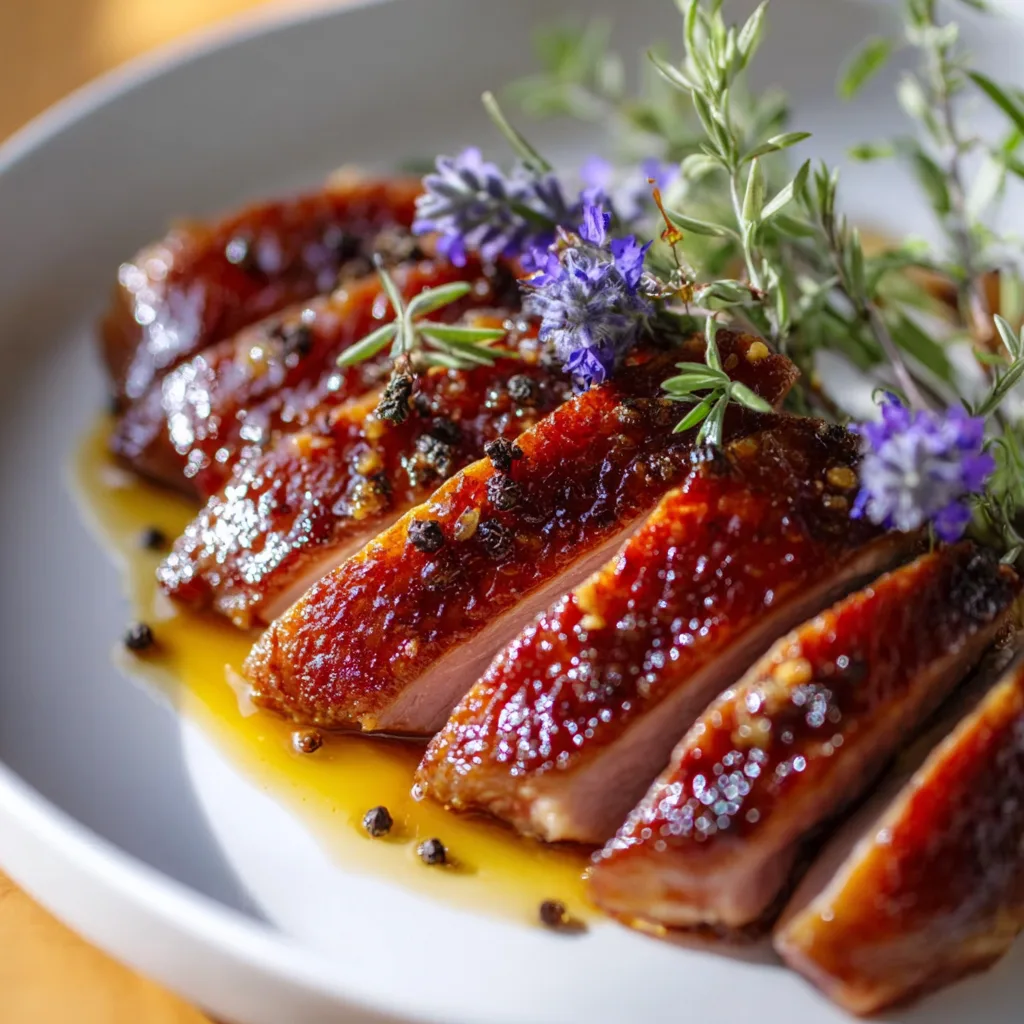
What makes this dish shine is restraint. Lavender is powerful, and when used gently, it adds an aromatic whisper rather than an overwhelming perfume. Paired with honey, it becomes soft, rounded, and elegant, enhancing the natural richness of duck rather than masking it. The glaze caramelizes lightly in the pan, coating the meat in a glossy finish that feels restaurant-worthy without being complicated.
This recipe is ideal for special occasions—romantic dinners, celebratory meals, or moments when you want to elevate a quiet evening into something extraordinary. Despite its elegant presentation, duck breast cooks quickly and relies on technique rather than long preparation. Once you master rendering the fat and achieving crispy skin, the rest falls effortlessly into place.
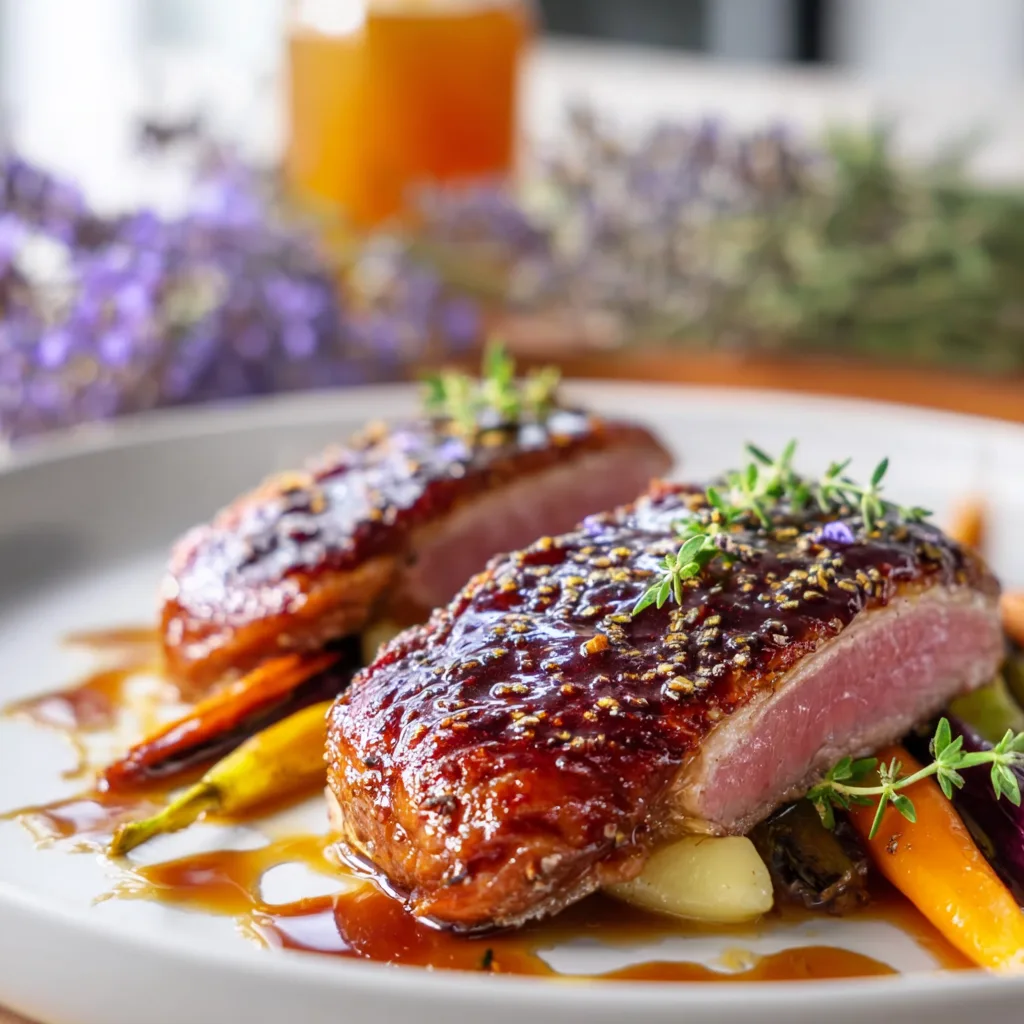
Duck breast with lavender honey glaze pairs beautifully with simple sides that let the main dish shine. Roasted vegetables, creamy mashed potatoes, or a light salad provide contrast without distraction. Each bite delivers richness, sweetness, and gentle floral notes in perfect harmony.
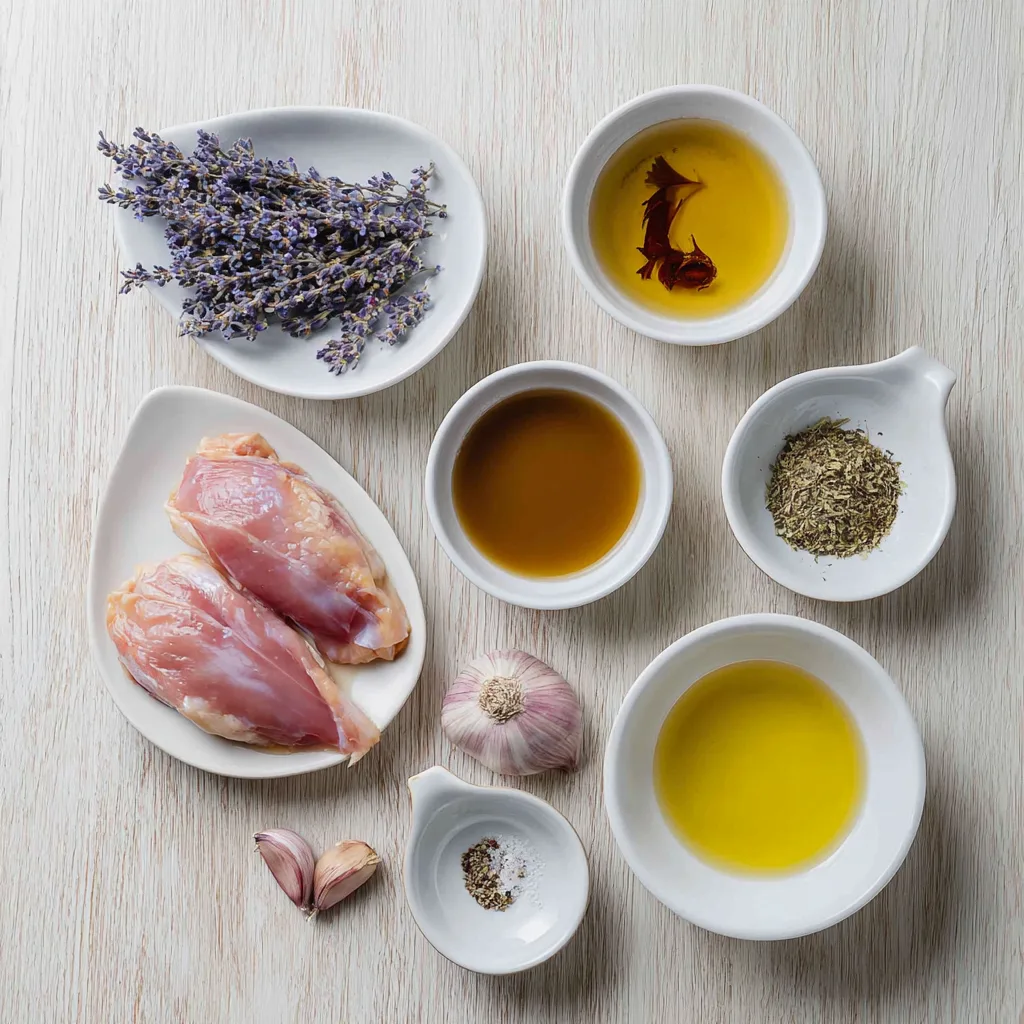
Ingredients:
- Duck breasts, skin-on
- Salt
- Black pepper
- Olive oil
- Garlic cloves, minced
- Honey
- Dried culinary lavender
- Balsamic vinegar or red wine vinegar
- Fresh thyme or rosemary (optional garnish)
Instructions:
- Pat the duck breasts dry and score the skin in a shallow crosshatch pattern, being careful not to cut into the meat.
- Season both sides generously with salt and black pepper.
- Place the duck breasts skin-side down in a cold skillet and turn the heat to medium.
- Cook slowly for 6–8 minutes, allowing the fat to render and the skin to become golden and crisp.
- Pour off excess fat as needed, leaving about 1 tablespoon in the pan.
- Flip the duck breasts and cook for 2–3 minutes for medium-rare, or to desired doneness.
- Remove duck from the pan and let it rest.
- In the same pan, add garlic and cook briefly until fragrant.
- Stir in honey, lavender, and balsamic vinegar, simmering gently until slightly thickened.
- Return the duck to the pan, spooning the glaze over the meat.
- Slice the duck breast and drizzle with remaining glaze before serving.
Duck Breast with Lavender Honey Glaze
Ingredients
Equipment
Method
- Score and season duck breasts.
- Render skin-side down in a cold pan until crispy.
- Flip and cook briefly, then rest duck.
- Simmer honey, lavender, garlic, and vinegar to form glaze.
- Glaze duck, slice, and serve.
Notes
Tips & Tricks
- Always start duck skin-side down in a cold pan for best rendering.
- Use culinary lavender sparingly to avoid bitterness.
- Let duck rest before slicing to retain juices.
Variations
- Add orange zest for a citrus-floral glaze.
- Use maple syrup instead of honey for deeper sweetness.
- Finish with a splash of white wine for extra acidity.
Serving Suggestions
- Serve with roasted carrots, parsnips, or potatoes.
- Pair with wild rice or creamy polenta.
- Perfect for date nights, dinner parties, or holiday meals.
Storage Information
- Store leftovers in an airtight container for up to 2 days.
- Reheat gently in a skillet to maintain texture.
- Glaze can be prepared ahead and reheated.
FAQ
- Is lavender safe to eat? Yes, when using culinary-grade lavender.
- What doneness is best for duck breast? Medium-rare to medium is ideal.
- Can I make this without lavender? Yes, the honey glaze still works beautifully.
History / Fun Facts
Duck breast is a cornerstone of French cuisine, often paired with sweet or acidic sauces. Lavender, a hallmark of Provençal cooking, brings a subtle floral note that reflects southern French flavors, making this pairing both classic and regionally inspired.