Beetroot Cured Salmon – A Stunning, Flavorful Take on Classic Gravlax
Beetroot cured salmon is one of those recipes that looks incredibly sophisticated while being surprisingly simple to make. With its striking ruby-red color and silky texture, it instantly elevates any brunch spread, appetizer board, or special-occasion meal. This dish takes inspiration from traditional Nordic gravlax, adding fresh beetroot to the cure for both visual drama and a subtle earthy sweetness.
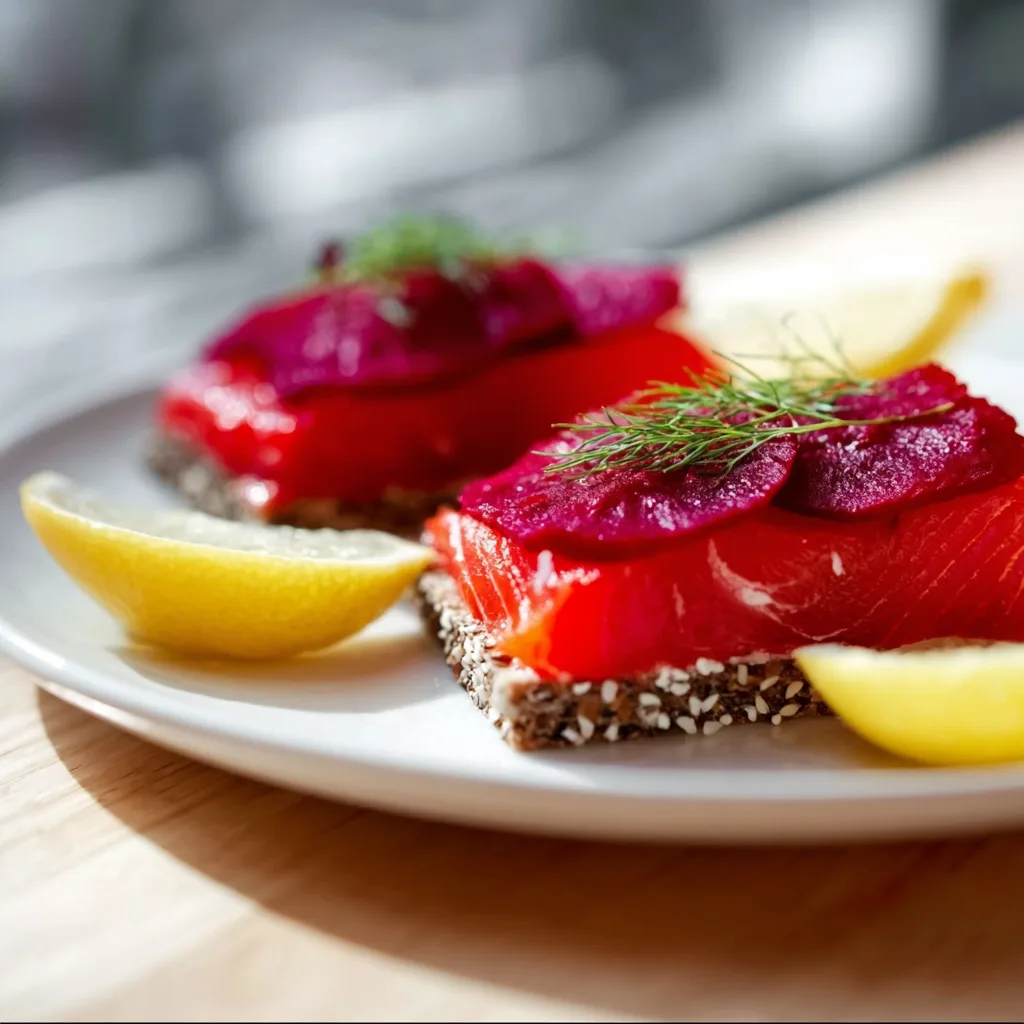
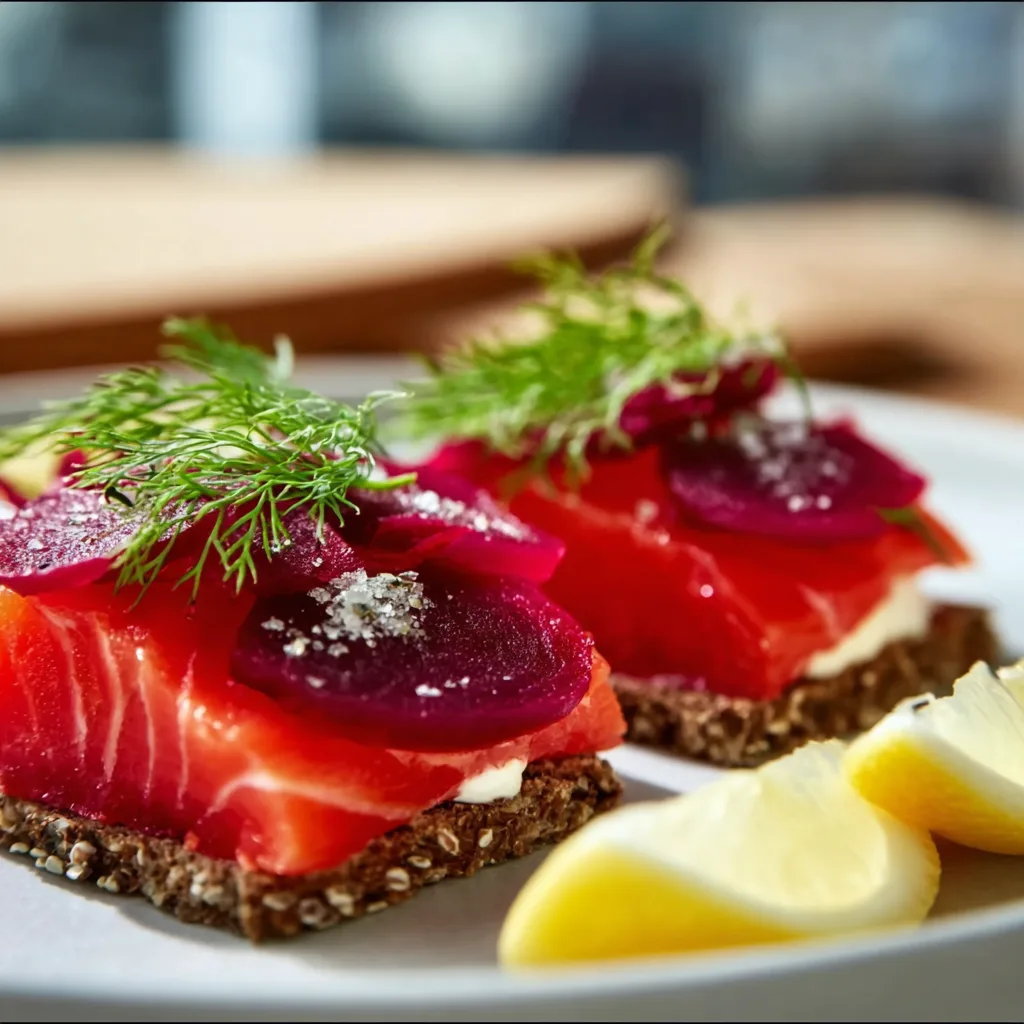
The curing process transforms raw salmon into something deeply flavorful and luxuriously tender. Salt and sugar gently draw out moisture while infusing the fish with seasoning, herbs, and aromatics. Beetroot not only enhances the flavor but stains the salmon with a jewel-toned hue that makes every slice look like it belongs in a fine-dining restaurant.
What’s especially wonderful about beetroot cured salmon is how hands-off it is. There’s no cooking involved, just a little prep and patience. Once cured, the salmon keeps well in the fridge and can be served in countless ways—from elegant canapés to relaxed weekend brunch plates. It’s a recipe that feels impressive yet approachable, perfect for entertaining or treating yourself to something special.
Ingredients:
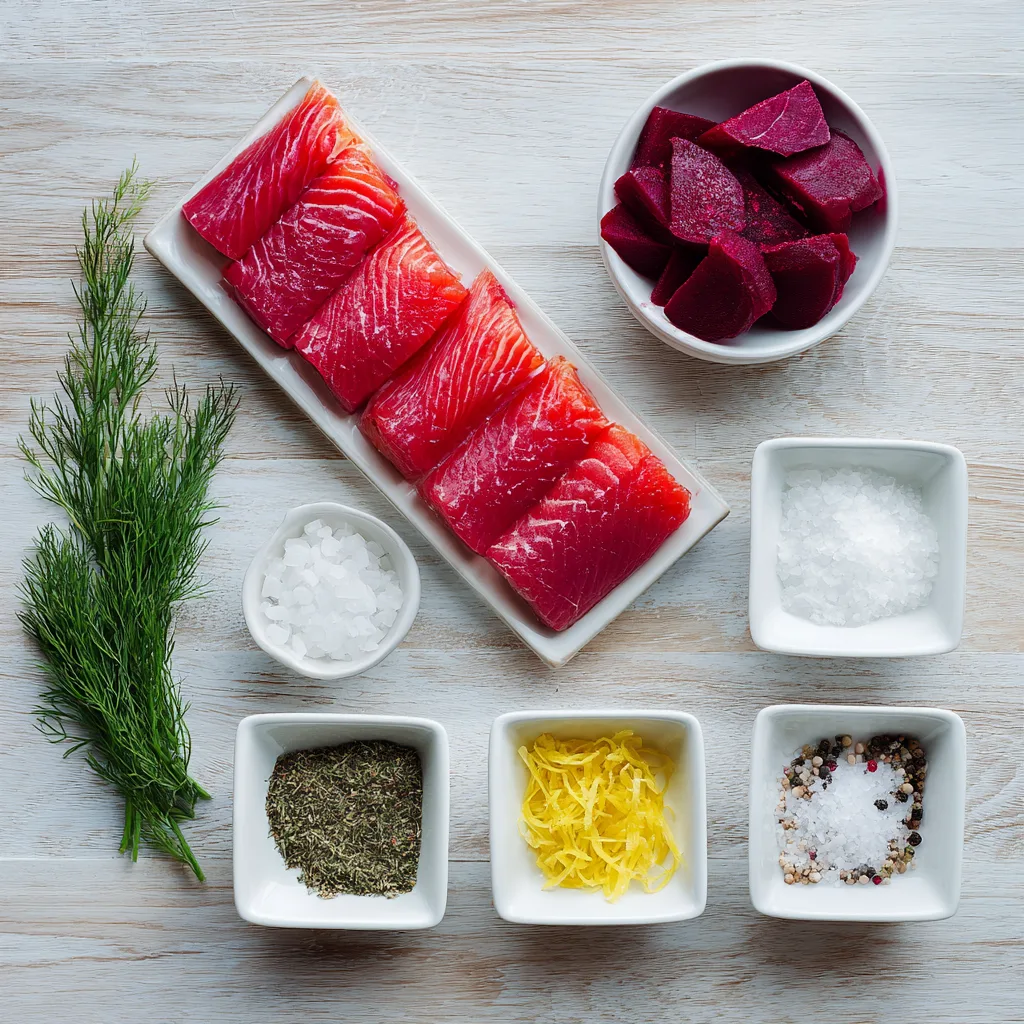
- 1½ lb fresh salmon fillet, skin on, pin bones removed
- 1 medium raw beetroot, peeled and finely grated
- ½ cup coarse sea salt
- ½ cup granulated sugar
- 1 teaspoon cracked black pepper
- Zest of 1 lemon or orange
- 1 small bunch fresh dill, chopped
- Optional: 1 tablespoon vodka or gin (traditional, optional)
Instructions:
- Pat the salmon fillet dry with paper towels and place it skin-side down on a large piece of plastic wrap.
- In a bowl, mix grated beetroot, salt, sugar, black pepper, citrus zest, and chopped dill.
- If using, stir the vodka or gin into the curing mixture.
- Spread the beetroot cure evenly over the flesh side of the salmon.
- Wrap the salmon tightly in plastic wrap, ensuring the cure stays in contact with the fish.
- Place the wrapped salmon in a shallow dish and set a light weight on top.
- Refrigerate for 36–48 hours, turning the salmon once halfway through.
- Unwrap the salmon and scrape off the curing mixture.
- Rinse lightly under cold water and pat dry.
- Using a sharp knife, slice thinly against the grain to serve.
Beetroot Cured Salmon
Ingredients
Equipment
Method
- Mix beetroot cure ingredients thoroughly.
- Coat salmon with cure, wrap tightly, and refrigerate weighted.
- Cure for 36–48 hours, turning once halfway.
- Rinse, dry, and slice thinly to serve.
Notes
Tips & Tricks
- Use sashimi-grade or very fresh salmon from a trusted source.
- Grate beetroot finely for even color and flavor distribution.
- Turning the salmon halfway ensures even curing.
- Slice only what you need and keep the rest wrapped.
- A long, sharp knife makes cleaner slices.
Variations
- Add juniper berries for a classic Scandinavian note.
- Use orange zest instead of lemon for warmer citrus flavor.
- Add fennel seeds for subtle licorice undertones.
- Swap dill for fresh tarragon.
- Try golden beetroot for a lighter color variation.
Serving Suggestions
- Serve on rye bread with cream cheese and capers.
- Add to bagels with pickled onions and cucumber.
- Serve as an appetizer with mustard-dill sauce.
- Pair with soft-boiled eggs and fresh greens.
- Use as a topping for blinis or crackers.
Storage Information
- Store cured salmon tightly wrapped in the refrigerator for up to 5 days.
- Slice as needed to maintain freshness.
- Do not freeze after curing.
- Keep refrigerated at all times.
FAQ
- Is this salmon raw? It is cured, not cooked.
- Is it safe to eat? Yes, when using very fresh salmon and proper curing.
- Can I cure longer than 48 hours? Yes, but texture will be firmer.
- Does it taste like beetroot? Only mildly—mostly earthy and fresh.
History / Fun Facts
Gravlax originated in Scandinavia as a method of preserving salmon using salt and sugar. Historically, fishermen buried salmon in the sand to ferment slightly. Modern versions rely on refrigeration, and creative additions like beetroot have become popular for their color and gentle sweetness, giving this traditional dish a contemporary twist.