Beijing Beef (Better Than Panda Express!)
If you’ve ever stood in line at your favorite takeout spot debating between orange chicken and that glossy, sweet-and-spicy beef, you already know the magic of Beijing Beef. There’s something irresistible about crispy strips of beef coated in a sticky red sauce, tossed with tender-crisp peppers and onions, and served piping hot over fluffy rice.
But here’s the good news: you don’t need to leave the house to enjoy it. This Beijing Beef recipe is better than Panda Express — crispier, saucier, fresher, and completely customizable. Once you taste it homemade, you may never go back to the takeout version again.
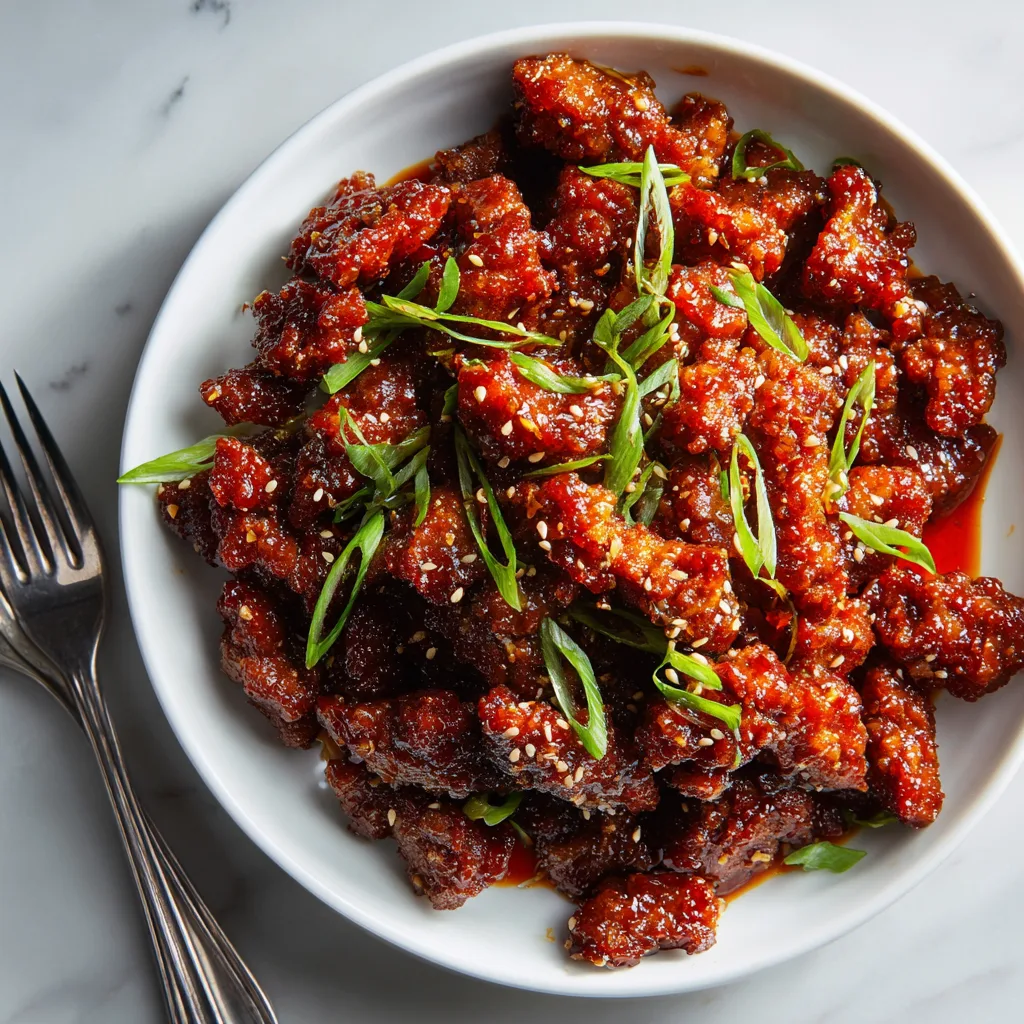
This recipe brings together crispy fried beef, vibrant bell peppers, and a bold sweet-and-tangy sauce that clings to every bite. It’s the perfect balance of crunch, heat, sweetness, and savory depth — and it’s surprisingly easy to make in your own kitchen.
Let’s dive in.
What Is Beijing Beef?
Beijing Beef is a popular Chinese-American dish known for its crispy battered beef slices coated in a sweet, tangy, slightly spicy red sauce. It typically includes red bell peppers and onions for crunch and freshness.
Unlike traditional Chinese dishes, this version is adapted for American tastes — with a thicker, sweeter glaze and a satisfying crispy coating. The result is a crave-worthy fusion dish that’s bold, flavorful, and incredibly comforting.
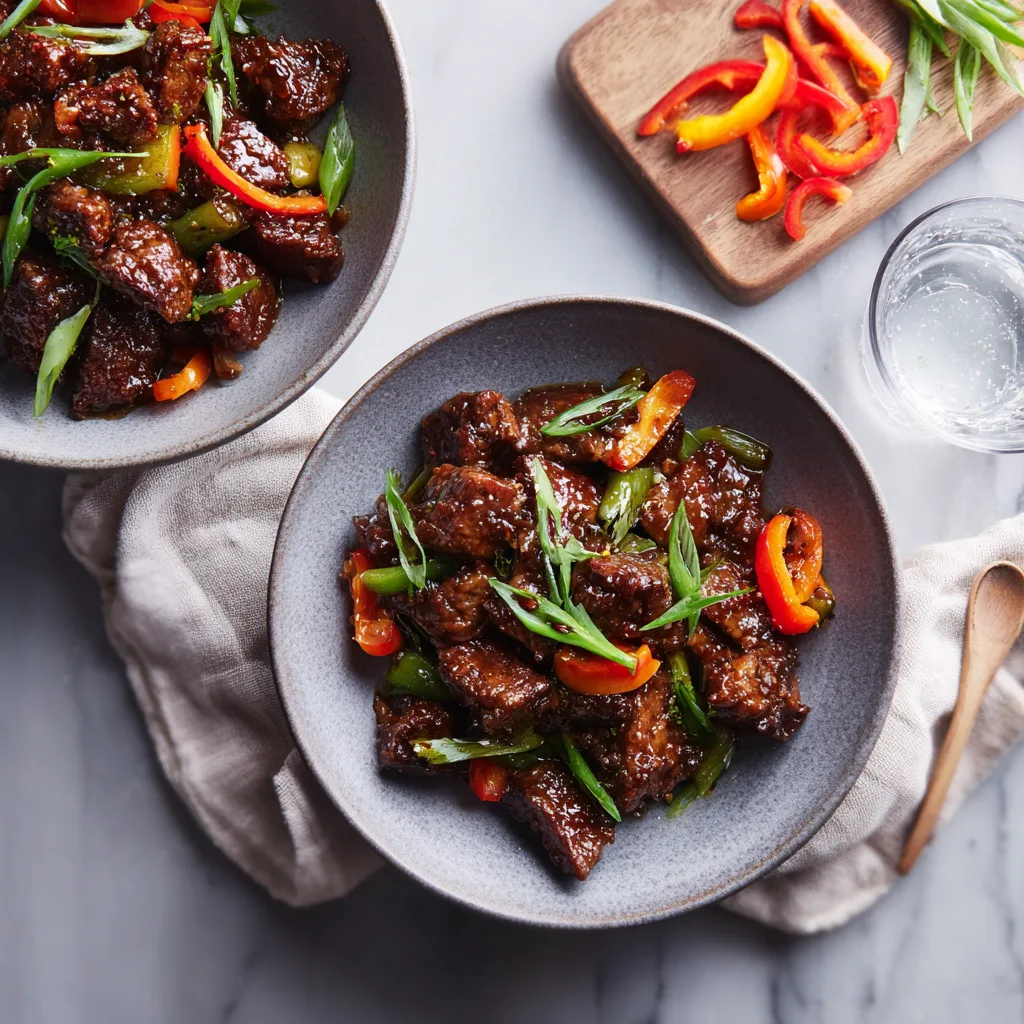
Why You’ll Love This Homemade Version
- Crispier beef than takeout
- Fresh, vibrant vegetables
- Perfect sweet-spicy balance
- No mystery ingredients
- Ready in under an hour
- Easily adjustable heat level
And the best part? You control the sauce. Want it spicier? Add chili flakes. Prefer it sweeter? Increase the sugar slightly. Like it tangier? A splash more vinegar does the trick.
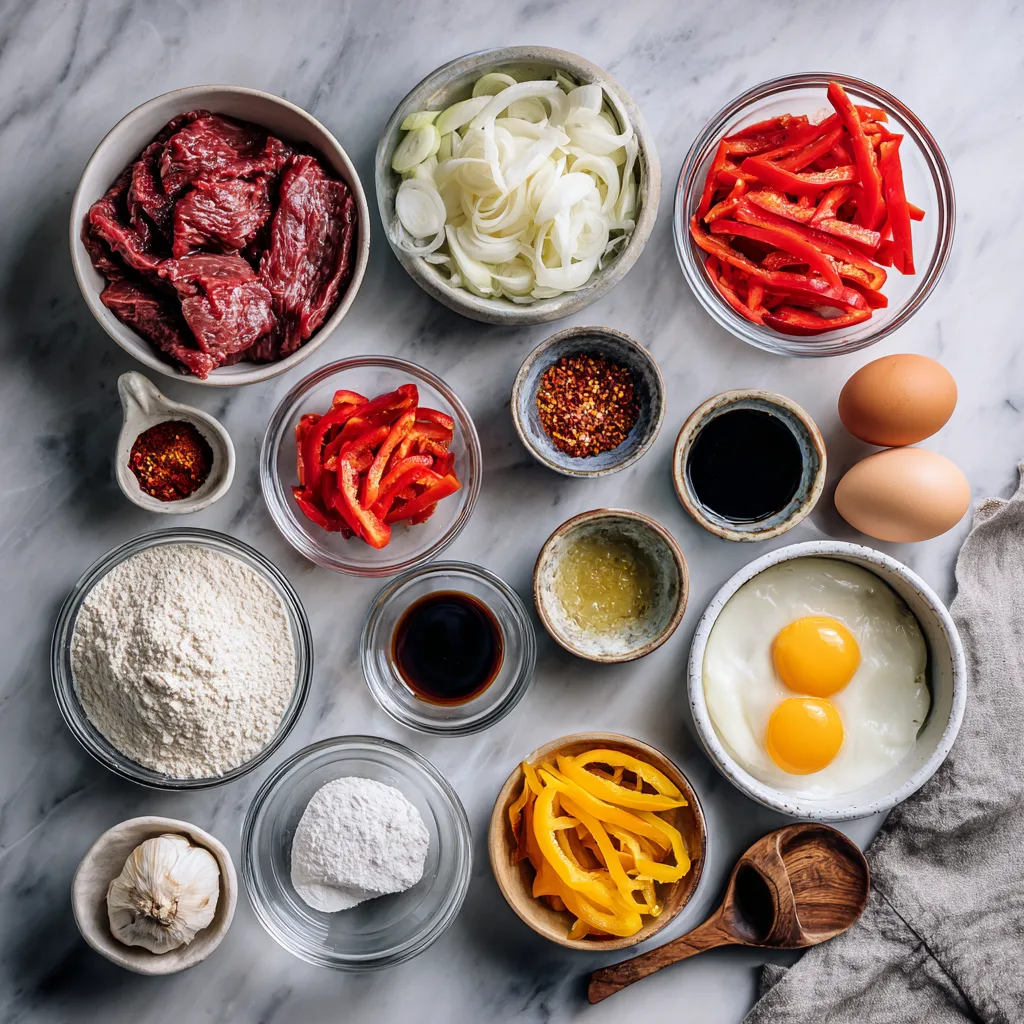
Ingredients
For the Beef:
- 1 ½ pounds flank steak, thinly sliced against the grain
- ½ cup cornstarch
- 2 large eggs, beaten
- ½ cup all-purpose flour
- ½ teaspoon salt
- ½ teaspoon black pepper
- Vegetable oil, for frying
For the Sauce:
- ½ cup ketchup
- ¼ cup sugar
- 3 tablespoons rice vinegar
- 3 tablespoons soy sauce
- 2 tablespoons hoisin sauce
- 1 teaspoon garlic, minced
- 1 teaspoon fresh ginger, grated
- ½ teaspoon red pepper flakes (adjust to taste)
- 2 tablespoons water
- 1 tablespoon cornstarch (for thickening)
For the Stir Fry:
- 1 red bell pepper, sliced
- 1 small onion, sliced
- 1 tablespoon oil
- Sliced green onions and sesame seeds (optional garnish)
Instructions
- Prepare the Beef:
Slice the flank steak thinly against the grain. This ensures tender bites after frying. - Set Up Breading Station:
In one bowl, beat the eggs. In another bowl, combine cornstarch, flour, salt, and pepper. - Coat the Beef:
Dip beef slices into the egg, then dredge in the cornstarch-flour mixture. Press lightly to ensure full coating. - Heat the Oil:
In a deep skillet or wok, heat vegetable oil to 350°F (175°C). The oil should be deep enough for shallow frying. - Fry the Beef:
Fry in batches for 2–3 minutes per side until golden brown and crispy. Avoid overcrowding. Transfer to a wire rack. - Make the Sauce:
In a bowl, whisk together ketchup, sugar, vinegar, soy sauce, hoisin sauce, garlic, ginger, red pepper flakes, water, and cornstarch. - Cook the Vegetables:
Heat 1 tablespoon oil in a wok. Stir fry bell peppers and onions for 2–3 minutes until tender-crisp. - Simmer the Sauce:
Pour sauce into the wok with vegetables. Cook until thickened and glossy, about 2–3 minutes. - Combine Everything:
Add crispy beef to the sauce and toss quickly to coat evenly. Cook just 1–2 minutes so beef stays crispy. - Serve Immediately:
Garnish with green onions and sesame seeds. Serve hot over rice.
Beijing Beef (Better Than Panda Express!)
Ingredients
Equipment
Method
- Slice flank steak thinly against the grain.
- Coat beef in egg then cornstarch and flour mixture.
- Fry at 350°F until golden and crispy.
- Whisk sauce ingredients together.
- Stir fry vegetables until tender crisp.
- Simmer sauce until thickened.
- Toss beef with sauce and vegetables and serve.
Notes
The Secret to Extra Crispy Beef
The key to restaurant-style crispiness lies in three things:
- Thin slicing
- Cornstarch coating
- Frying at the correct temperature
Cornstarch creates that signature light crunch, while maintaining oil temperature ensures the coating doesn’t get soggy. Fry in small batches and let the oil return to temperature between rounds.
Sauce Flavor Breakdown
The sauce is where the magic happens:
- Ketchup provides sweetness and color
- Rice vinegar adds brightness
- Soy sauce brings saltiness
- Hoisin adds depth
- Sugar balances acidity
- Chili flakes introduce gentle heat
It’s bold, sticky, and perfectly balanced.
Variations
Make It Spicier
Add 1 teaspoon chili paste or extra red pepper flakes.
Make It Healthier
Air fry the beef instead of deep frying. Spray lightly with oil and cook at 400°F for 10–12 minutes.
Add More Vegetables
Broccoli, snap peas, or carrots work beautifully.
Low-Carb Option
Serve over cauliflower rice.
Serving Suggestions
Beijing Beef pairs perfectly with:
- Steamed jasmine rice
- Fried rice
- Lo mein noodles
- Simple cucumber salad
- Stir-fried bok choy
For a full takeout-style spread, serve alongside egg rolls and hot and sour soup.
Storage & Reheating Tips
Store leftovers in an airtight container for up to 3 days.
Reheat in a skillet over medium heat to maintain crispiness. Avoid microwaving if possible.
Fun Cultural Note
While inspired by Chinese flavors, Beijing Beef is primarily a Chinese-American creation. It reflects how immigrant cuisines evolve and adapt to local tastes — combining bold sweetness with crispy textures that Americans love.
Final Thoughts
There’s something deeply satisfying about recreating your favorite takeout dish at home — especially when it tastes even better than the original. This homemade Beijing Beef delivers crispy texture, bold flavor, and that irresistible sticky glaze in every bite.
Once you master it, you’ll realize how simple and rewarding it is to make restaurant-quality Chinese food right in your own kitchen.
And trust me — once you taste this version, takeout might never be the same again.