Olivia Hayes
 In Greek kitchens, some of the most beloved dishes are also the simplest. Traditional Greek maroulosalata is a perfect example. Made with crisp lettuce, fragrant dill, green onions, good olive oil, and fresh lemon juice, this humble salad is all about balance, freshness, and letting quality ingredients speak for themselves. It’s not meant to impress with complexity—it wins hearts with purity.
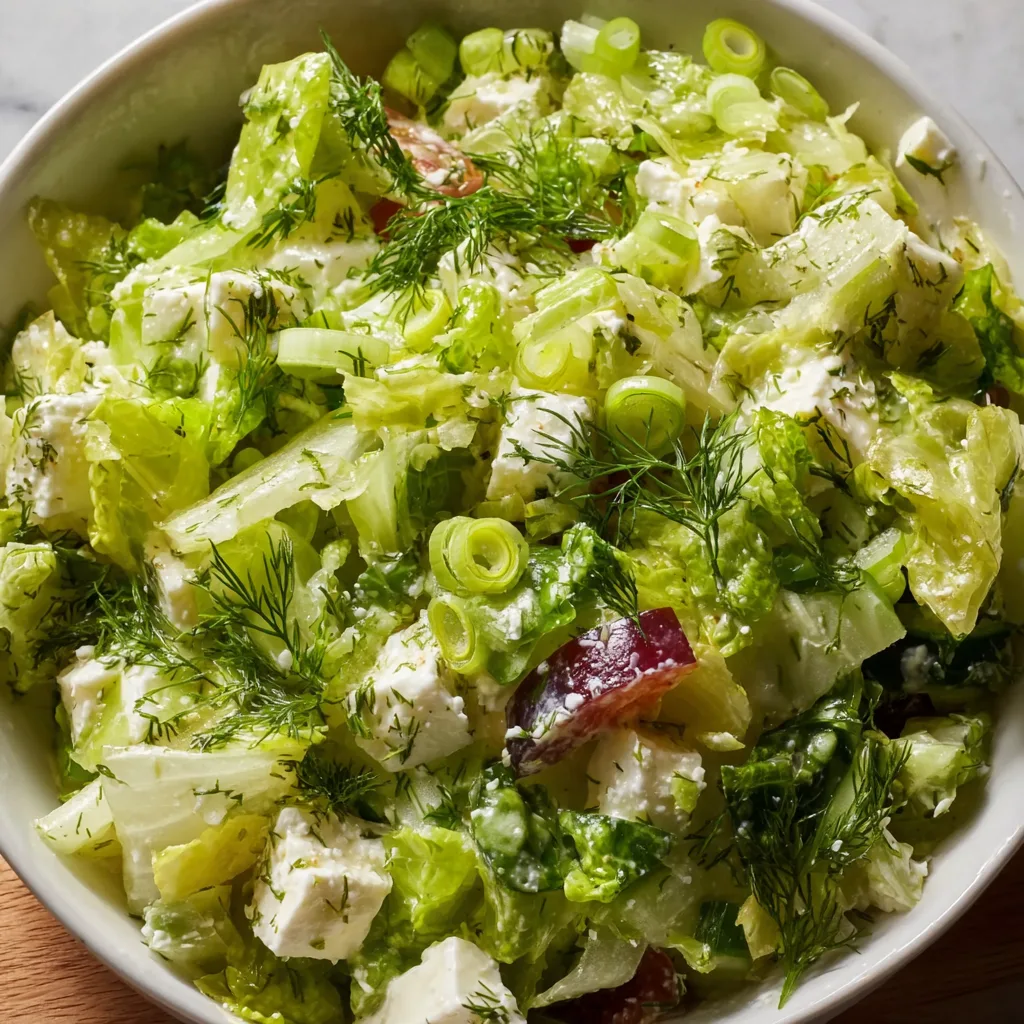
Maroulosalata is a staple on Greek family tables, especially during spring and summer when lettuce is at its freshest. You’ll find it served alongside grilled fish, roasted chicken, lamb, or even just a piece of crusty bread and feta. It refreshes the palate, brightens heavier dishes, and adds a clean, herbal note to any meal.
What makes maroulosalata special isn’t just what’s in it, but how it’s treated. The lettuce is finely chopped, not roughly torn, creating a soft, almost fluffy texture. The dressing is minimal—just olive oil, lemon juice, salt, and pepper—applied gently so the leaves stay tender rather than weighed down. Dill and green onions add aroma and subtle sharpness without overpowering the salad.
This is the kind of recipe passed down through generations, often made by feel rather than strict measurement. Every Greek household has its own version, but the soul of the dish remains the same: fresh, light, and deeply satisfying in its simplicity.
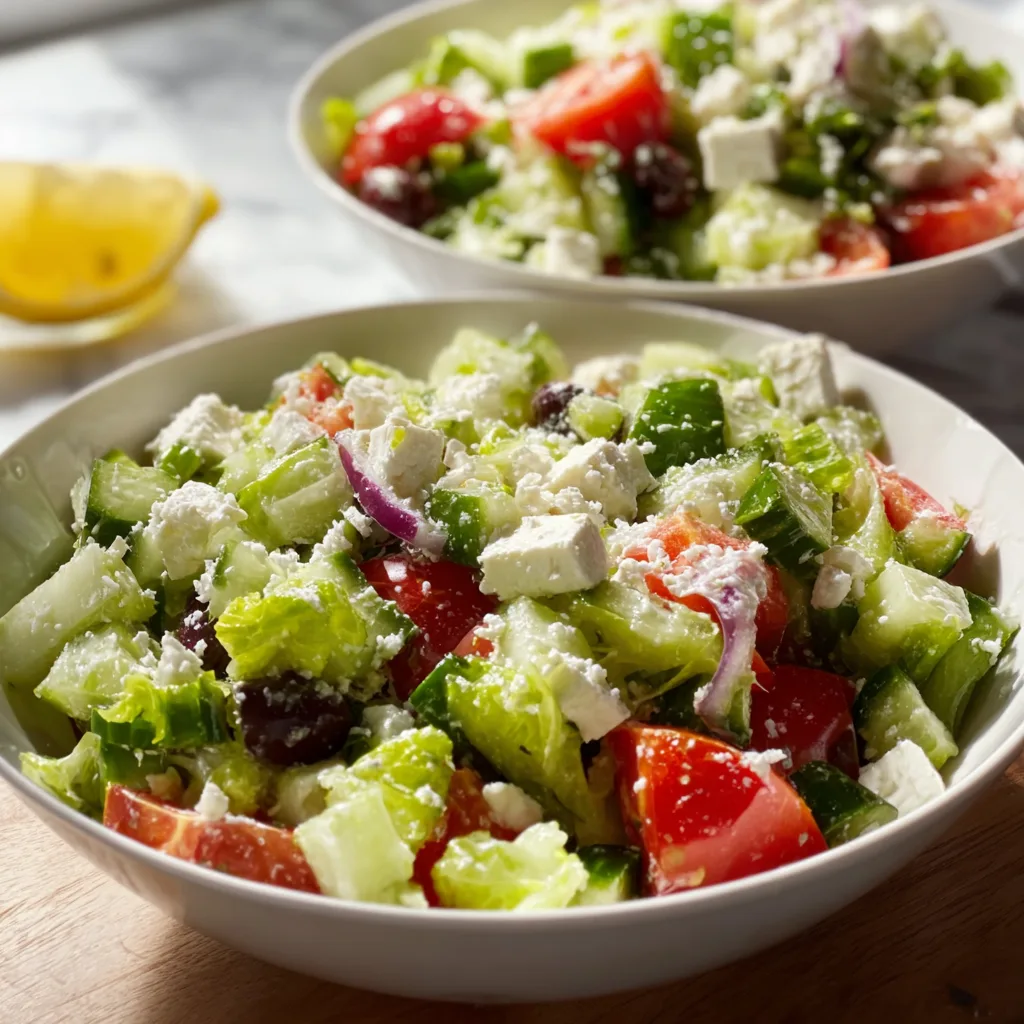
Ingredients:
- 2 large heads romaine lettuce, finely chopped
- 4 green onions, thinly sliced
- 0.25 cup fresh dill, finely chopped
- 0.25 cup extra virgin olive oil
- 2 tablespoons fresh lemon juice
- 0.5 teaspoon sea salt
- 0.25 teaspoon freshly ground black pepper
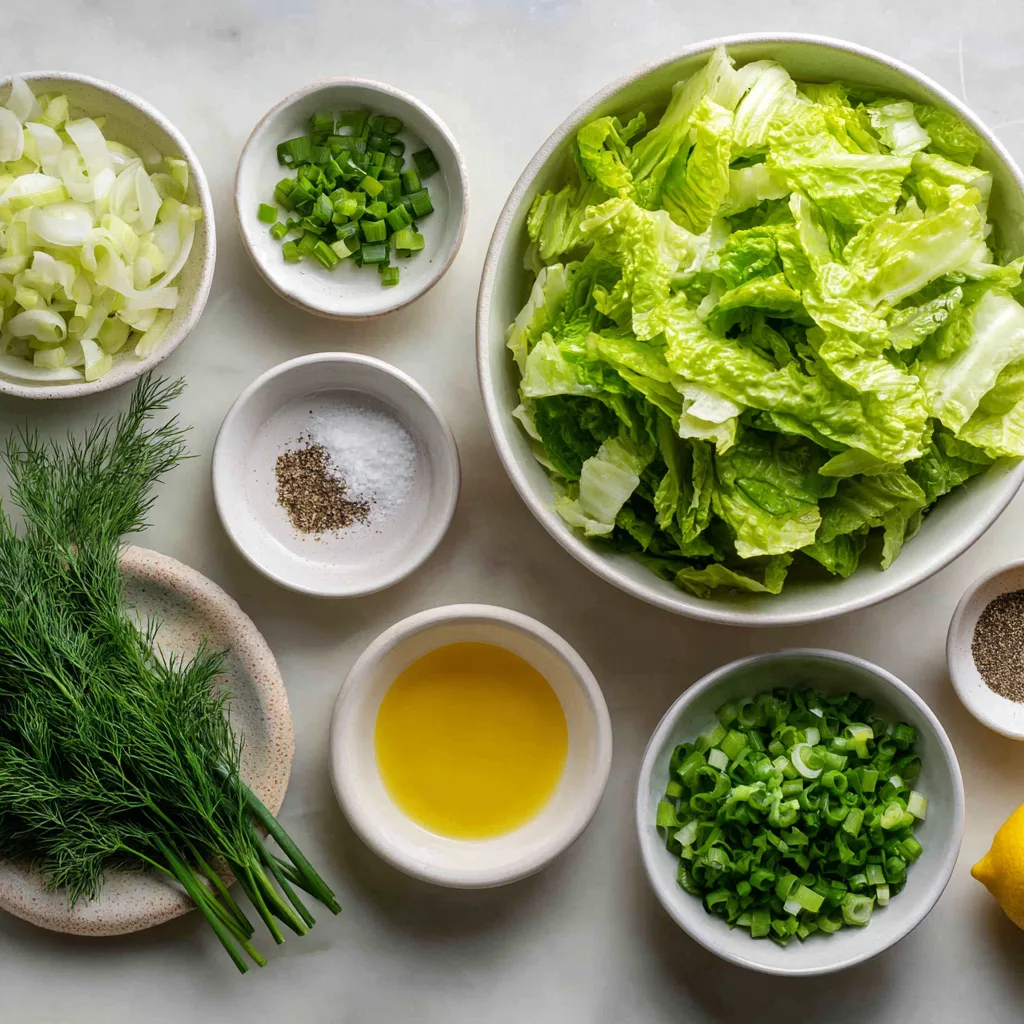
Instructions:
- Wash the romaine lettuce thoroughly and dry it very well. Finely chop the lettuce and place it in a large bowl.
- Add the sliced green onions and chopped fresh dill to the bowl.
- Sprinkle the salt and black pepper evenly over the salad.
- Drizzle the olive oil and lemon juice over the lettuce mixture.
- Using clean hands or salad servers, gently toss the salad until everything is lightly coated and slightly softened.
- Taste and adjust salt, lemon, or olive oil as needed.
- Serve immediately for the freshest texture and flavor.
Traditional Greek Maroulosalata
Ingredients
Equipment
Method
- Finely chop and dry the romaine lettuce.
- Add green onions and dill to the bowl.
- Season with salt and pepper.
- Drizzle with olive oil and lemon juice.
- Gently toss and serve immediately.
Notes
Tips & Tricks
- Finely chopping the lettuce is key to authentic maroulosalata texture.
- Always dry the lettuce well to prevent a watery salad.
- Use high-quality extra virgin olive oil—it makes a noticeable difference.
- Toss gently to avoid bruising the lettuce.
Variations
- Add thinly sliced cucumber for extra crunch.
- Crumble feta on top for a richer version.
- Add a pinch of dried oregano for a subtle earthy note.
- Include a splash of red wine vinegar along with lemon for sharper acidity.
Serving Suggestions
Maroulosalata pairs beautifully with grilled fish, souvlaki, roasted chicken, or lamb. It’s also perfect alongside lentils, beans, or simple Mediterranean spreads with bread and olives.
Storage Information
This salad is best enjoyed fresh. If needed, you can store leftovers covered in the refrigerator for up to 24 hours, though the lettuce will soften over time.
FAQ
Can I use iceberg lettuce instead of romaine?
Romaine is traditional and preferred for flavor and texture, but iceberg can work in a pinch.
Is maroulosalata the same as horiatiki?
No. Horiatiki is the classic Greek village salad with tomatoes, cucumber, olives, and feta. Maroulosalata is a lettuce-based salad.
Why is dill important in this recipe?
Dill adds freshness and a distinctly Greek aroma that defines the salad.
History / Fun Facts
Maroulosalata comes from the Greek word “marouli,” meaning lettuce. Historically, it was a way to make the most of garden-fresh greens with minimal ingredients, reflecting the Mediterranean philosophy of seasonal, simple, and wholesome cooking.