Olivia Hayes
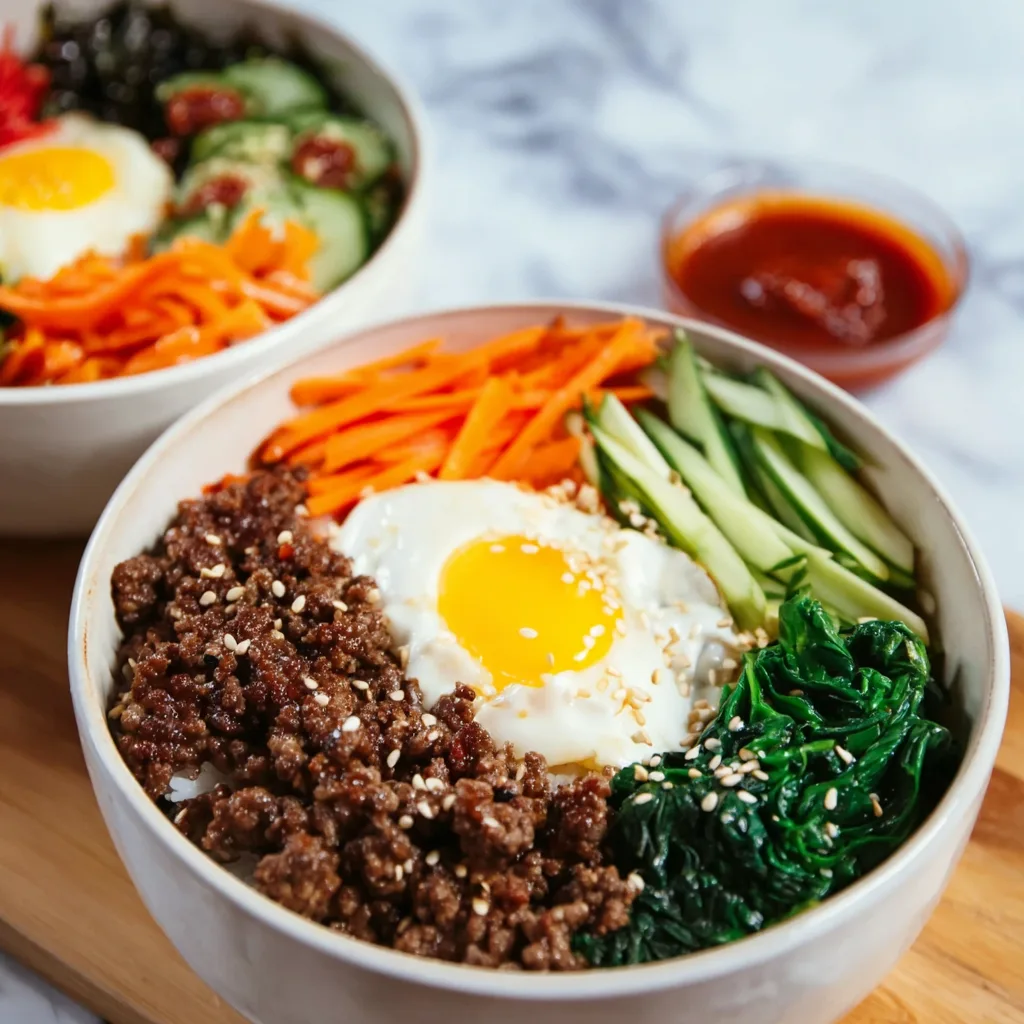
 Bibimbap is one of those dishes that feels both comforting and exciting at the same time. With its colorful toppings, bold flavors, and mix-it-yourself charm, it’s a meal that never feels boring. Traditionally, bibimbap can involve multiple vegetables, marinated meats, and careful preparation—but this easy bibimbap with ground beef brings all the joy of the classic dish into a version that’s practical, approachable, and perfect for everyday cooking.

At its heart, bibimbap is about balance. Warm rice meets savory protein, crisp-tender vegetables, rich egg yolk, and a punchy sauce that ties everything together. This simplified version uses ground beef instead of sliced steak, making it faster to cook and easier to find, while still delivering deep, satisfying flavor. The result is a weeknight-friendly bowl that feels nourishing, customizable, and incredibly satisfying.
What makes this recipe so appealing is its flexibility. You don’t need specialty equipment or hard-to-find ingredients, and you can adapt the vegetables based on what’s already in your fridge. The ground beef cooks quickly and absorbs the savory-sweet seasoning beautifully, while the vegetables stay vibrant and fresh. When everything comes together over a bowl of fluffy rice, it creates a meal that feels thoughtful without being complicated.
This easy bibimbap with ground beef is ideal for busy evenings, meal prep, or introducing Korean-inspired flavors to your dinner rotation. It’s comforting, colorful, and endlessly adaptable—exactly the kind of recipe that earns a permanent spot in your kitchen.
Ingredients:
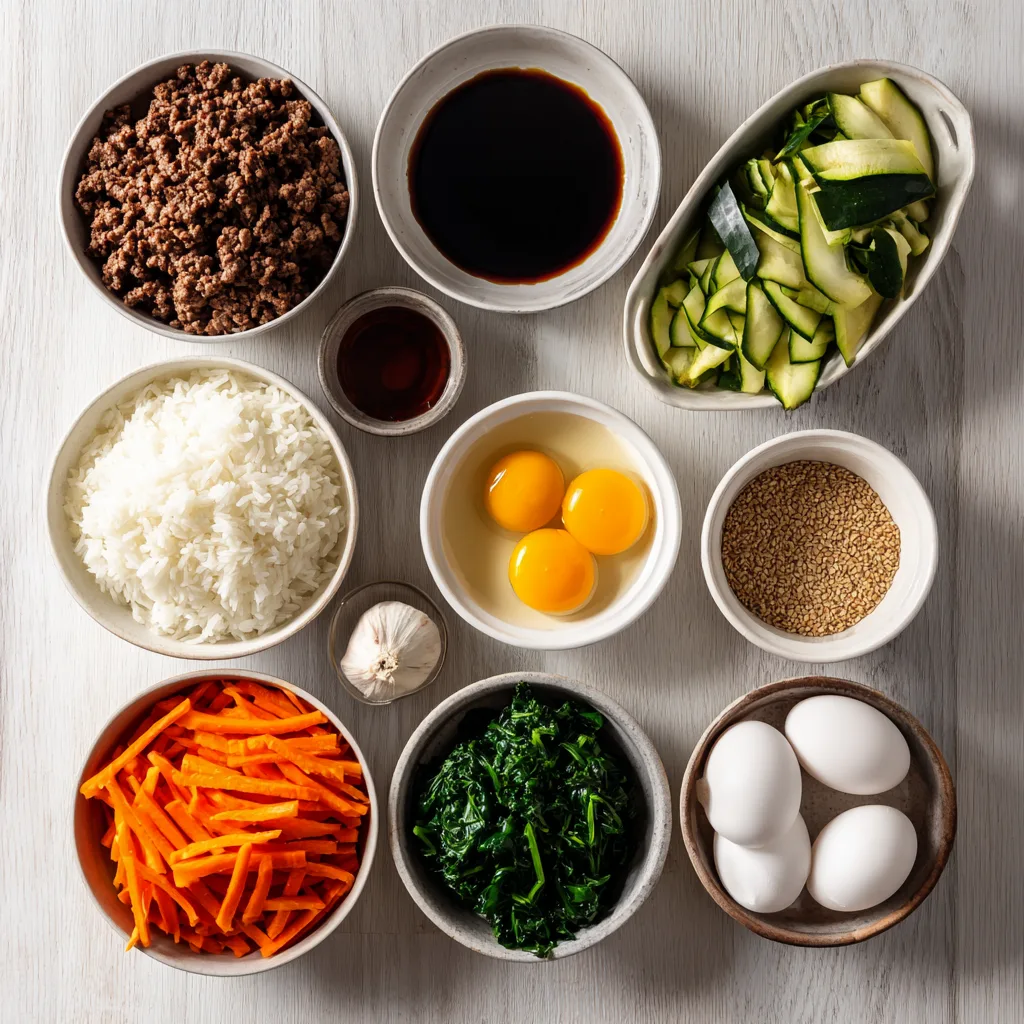
- Cooked white rice
- Ground beef
- Soy sauce
- Brown sugar
- Garlic cloves, minced
- Sesame oil
- Carrots, julienned
- Zucchini, sliced
- Fresh spinach
- Eggs
- Gochujang
- Vegetable oil
- Sesame seeds
- Green onions
Instructions:
- Prepare the rice according to package instructions and keep warm.
- In a bowl, mix soy sauce, brown sugar, minced garlic, and sesame oil.
- Heat vegetable oil in a skillet over medium heat.
- Add ground beef and cook until browned, breaking it up as it cooks.
- Pour the soy sauce mixture over the beef and cook until glazed and slightly caramelized. Remove from heat.
- In the same skillet, sauté carrots until just tender. Set aside.
- Sauté zucchini briefly until softened but still bright. Set aside.
- Add spinach to the pan and cook until just wilted. Season lightly with salt.
- Fry eggs sunny-side up or over-easy, keeping the yolk slightly runny.
- To assemble, place rice in bowls as the base.
- Arrange ground beef and vegetables in sections over the rice.
- Top with a fried egg.
- Finish with gochujang, sesame seeds, and sliced green onions.
- Mix everything together before eating and enjoy immediately.
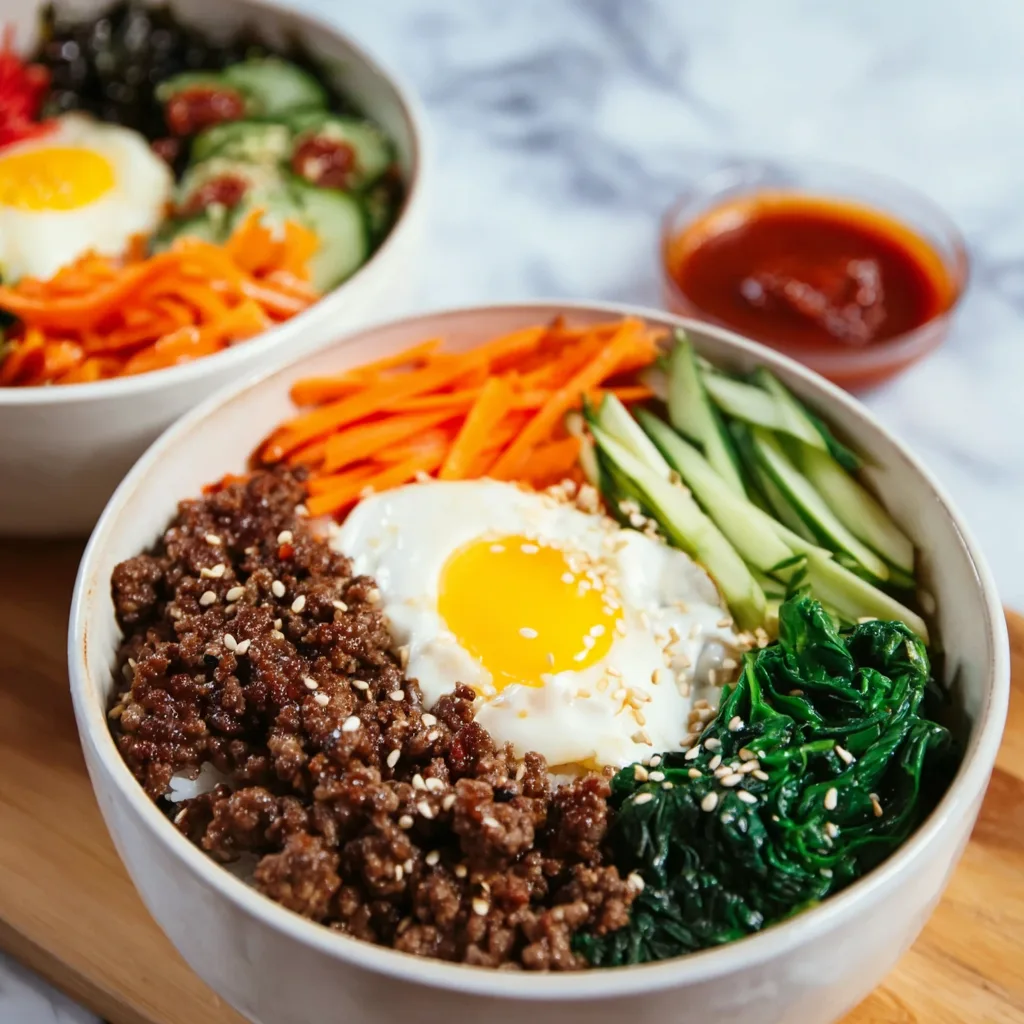
Easy Bibimbap with Ground Beef
Ingredients
Equipment
Method
- Cook rice and keep warm.
- Brown ground beef in a skillet.
- Add soy sauce, sugar, garlic, and sesame oil to beef.
- Sauté vegetables separately until tender.
- Fry eggs to desired doneness.
- Assemble rice bowls with beef, vegetables, egg, and sauce.
Notes
Tips & Tricks
- Keep vegetables lightly seasoned so the beef and gochujang shine.
- Use day-old rice for the best texture if available.
- Adjust gochujang quantity to control spice level.
Variations
- Swap ground beef for ground chicken or turkey.
- Add mushrooms, bean sprouts, or cucumber for extra crunch.
- Use brown rice or cauliflower rice for a lighter option.
Serving Suggestions
- Serve with kimchi or pickled radishes on the side.
- Pair with a light cucumber salad for freshness.
- Add extra sauce or a drizzle of sesame oil at the table.
Storage Information
- Store components separately in airtight containers for up to 3 days.
- Reheat rice and beef gently; add fresh egg when serving.
FAQ
Can I make this ahead of time?
Yes, prep the beef, vegetables, and rice in advance and assemble when ready to eat.
Is bibimbap spicy?
It can be mild or spicy depending on how much gochujang you use.
History / Fun Facts
Bibimbap translates to “mixed rice” in Korean and has been enjoyed for centuries. Traditionally served as a way to use leftover side dishes, it evolved into one of Korea’s most iconic meals. This simplified version keeps the spirit of the dish alive while adapting it for modern home kitchens.